


Voxpop #5
Presented by Paul Rowland
August 24th, 2023
Voxpops are experiments in which abstract photographers of the Hintology community either have their work engaged with specific audiences or come to discuss particular topics related to their practice.
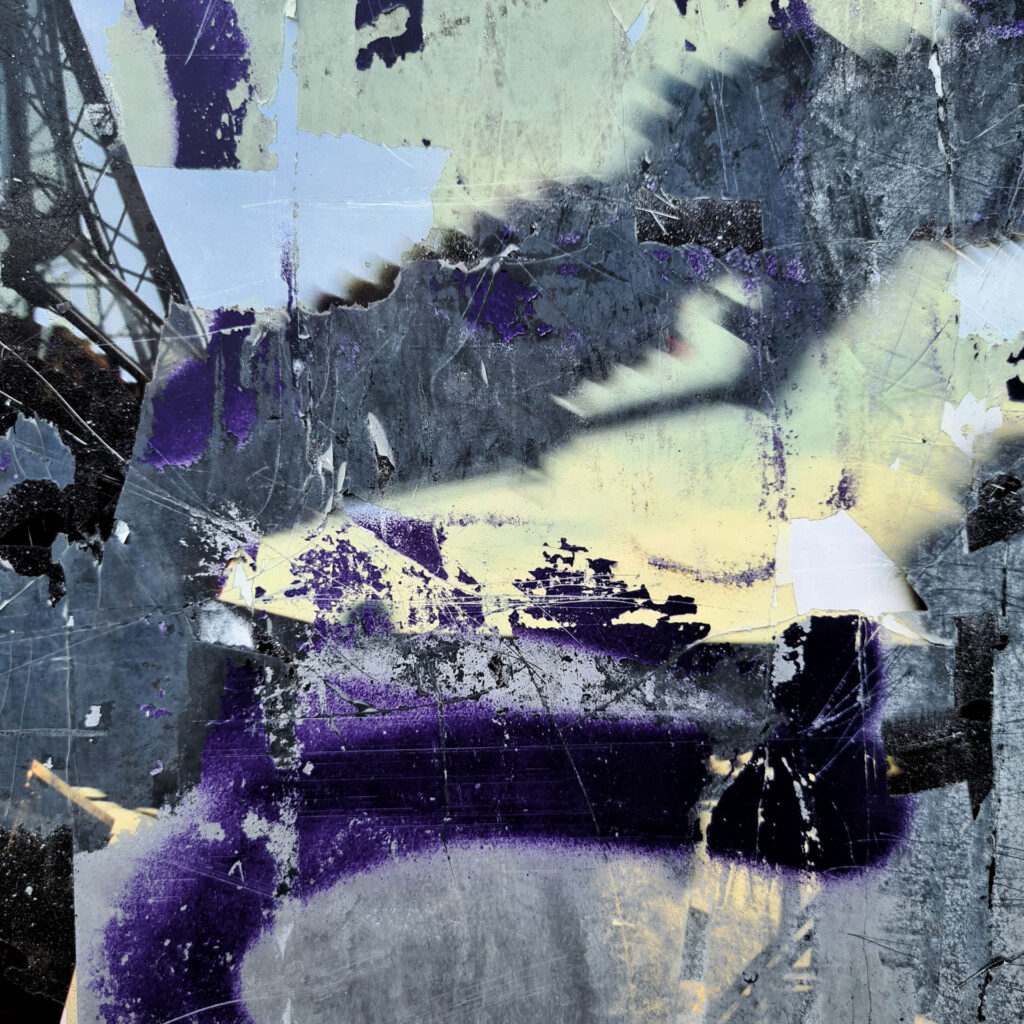
“Distant Ship” (from the Sternbrücke series) by R.J. Bardowick.
“I have often felt a little uncomfortable with using the conventional vocabulary to describe taking photos, such as: ‘aiming’, ‘pointing’, ‘shooting’, ‘capturing’, because these words seem to be associated with an underlying metaphor of hunting or war, with the camera figured as a kind of gun. Of course, I know this doesn’t mean that photography described in this way is inherently violent or aggressive, but I believe that the way we talk about things is connected to how we think and feel about them, so I prefer to use a different language.
For example, my photography is more akin to the slow process of foraging and preserving, which is why I named my Instagram account ‘Jonathan Pickles the City’. When speaking to other photographers, I have noticed much difference and variation in how they talk about what they do, with some preferring to describe photos as ‘images’, or to say ‘make’ or ‘create’ instead of ‘take’ a photo.
This specific and conscious use of language appears to reveal something about how they understand photography, about the kind of images they make and their relation to the world as they photograph it. To find out more, I asked nine photographers to describe how they see their own practice.”
I’m a visual artist, always have been. After learning the usual crafts at art school, I lost interest in representing things I see in a naturalistic way, and searched for ways to create images that I hadn’t seen before. My first way to go was abstract painting, then collage — a means of connecting far fetched elements to create combine images. Main influence: Robert Rauschenberg. My compositional approach was always decomposition, the idea (as in Jackson Pollock’s all-over) that the frame isn’t like a box that you stuff things into, minding the frame as an outer limit, but more like a window cut out of a larger continuum.
Through the years, I started seeing the kinds of images I’m interested in everywhere. So I started photographing them. The motivation and the thrill of it quite much resembles that of collecting seashells on the seashore. I hardly walk any given route without being on the lookout for these little gems that no-one sees but me. With the exception of my close neighbourhood and its routine shopping walks that I know every square millimeter of.
I don’t see a great difference between the photographing and my painting and collaging work. It’s all about seeing images that intrigue me. I want images that, to me, look like something else than what they originally have been meant to mean. Art is seeing, art is transformation. When I find something that satisfies me, there’s a spark lighting up. That’s what I hope to show the viewers.
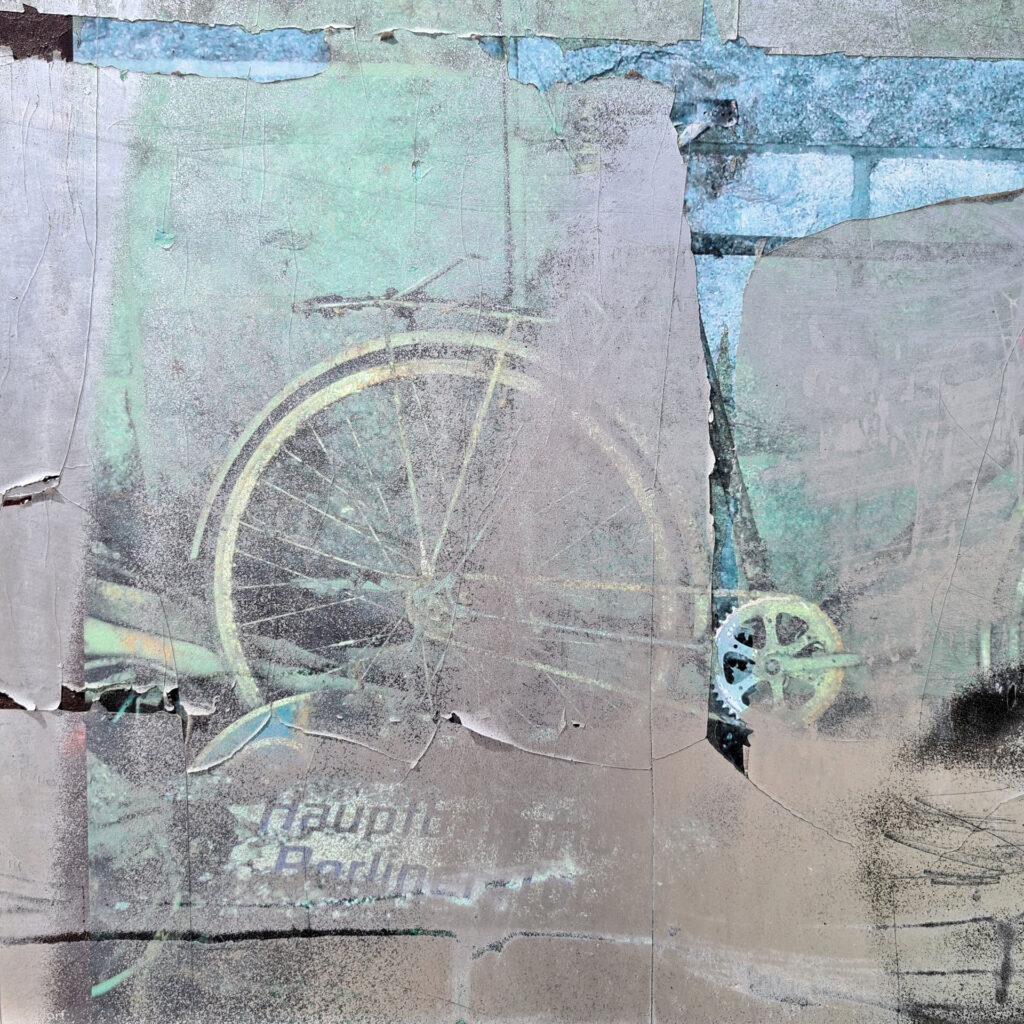
“Connected” (from the Sternbrücke series) by R.J. Bardowick.
My photographic collection of self-taught, intuitive, found art emerged from the nadir of a late autism diagnosis and the concomitant burnout that revealed it.
As a Black queer feminist mama in the U.S. who facilitates race and equity training in the education sector, it is no wonder that the year 2020 pushed me over the edge, my once subtle social and sensory differences becoming pronounced. Unbeknownst to me, the hypomania and racing thoughts that had propelled me through two decades of overachievement and workaholism in the name of social change, were not my strength but my Achilles heel. I had ignored and resisted the early signs of burnout in years prior, so once it fully hit me, my pace ground to an involuntary halt.
Though the autism diagnosis offered an explanation for my substantially reduced capacity, it was also deeply unsettling. I was overcome with grief as I concurrently processed the diagnosis, the pandemic, enduring racism, the climate emergency, intergenerational trauma, inner child wounds, and irreconcilable differences in my marriage. It was a spectacular mid-life crisis, in which I lost my sense of place and space in the world, and with it, my way with words. I was rendered speechless for some time.
Yet, in my silence and solitude, I began to honor my sensory experiences. Photography became a contemplative practice of documenting sensory memories I’d previously dismissed or overlooked because they seemed weird or nonsensical. I found myself taking photos of whatever caught my eye and gave me pause. In the perpetual stillness of my healing period, I was drawn into cracks, paint splatter, rust, repetition, reflections, textures, shadows, iridescence. As I built community with other neurodivergent people and learned more about autism, I realized I was capturing photos and videos of visual stims that were triggered by pattern recognition in everyday life. I kept stumbling upon and peering into infinite details I’d missed in my busy years. As I built community with other artists and especially became involved with Abstract Photographers International, I began to situate the themes of my photography in historical and cultural context. It was deeply affirming to know that I was not alone. There was an underlying order, tradition, and meaning to the seemingly chaotic abstractions I was collecting.
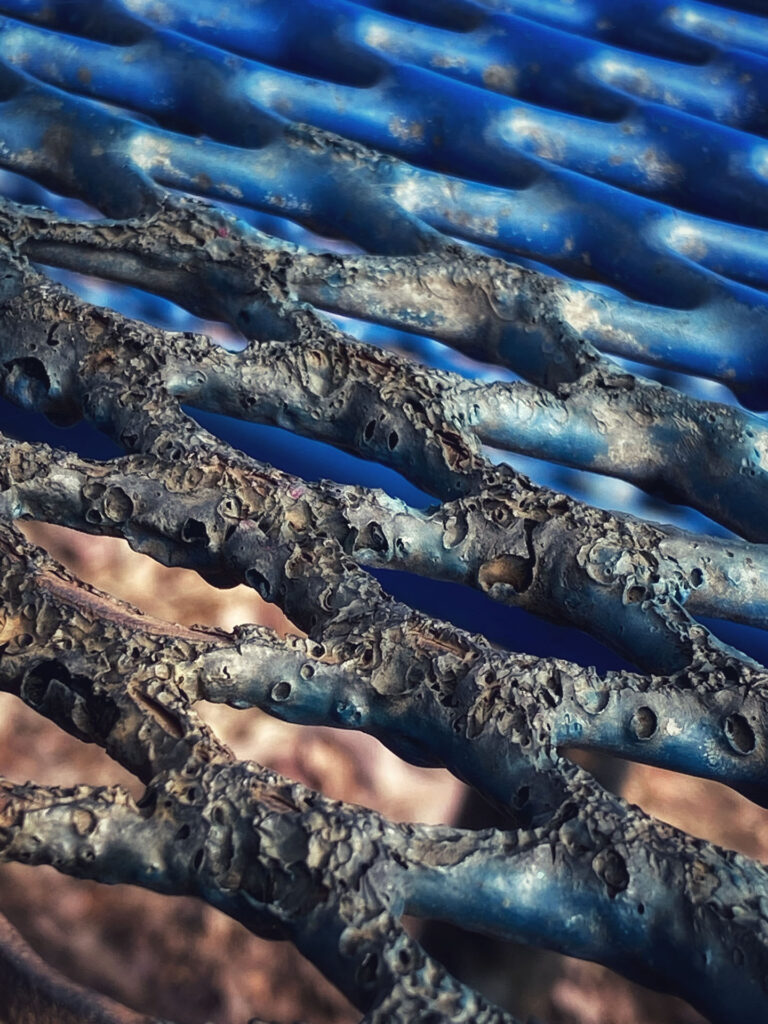
Burnout” by Jessica Grady Heard.







What do you think?
It is nice to know your opinion. Leave a comment.