


INTERVIEW #30 with J. Alan Constant
Interview by Paul Rowland
January 21st, 2023
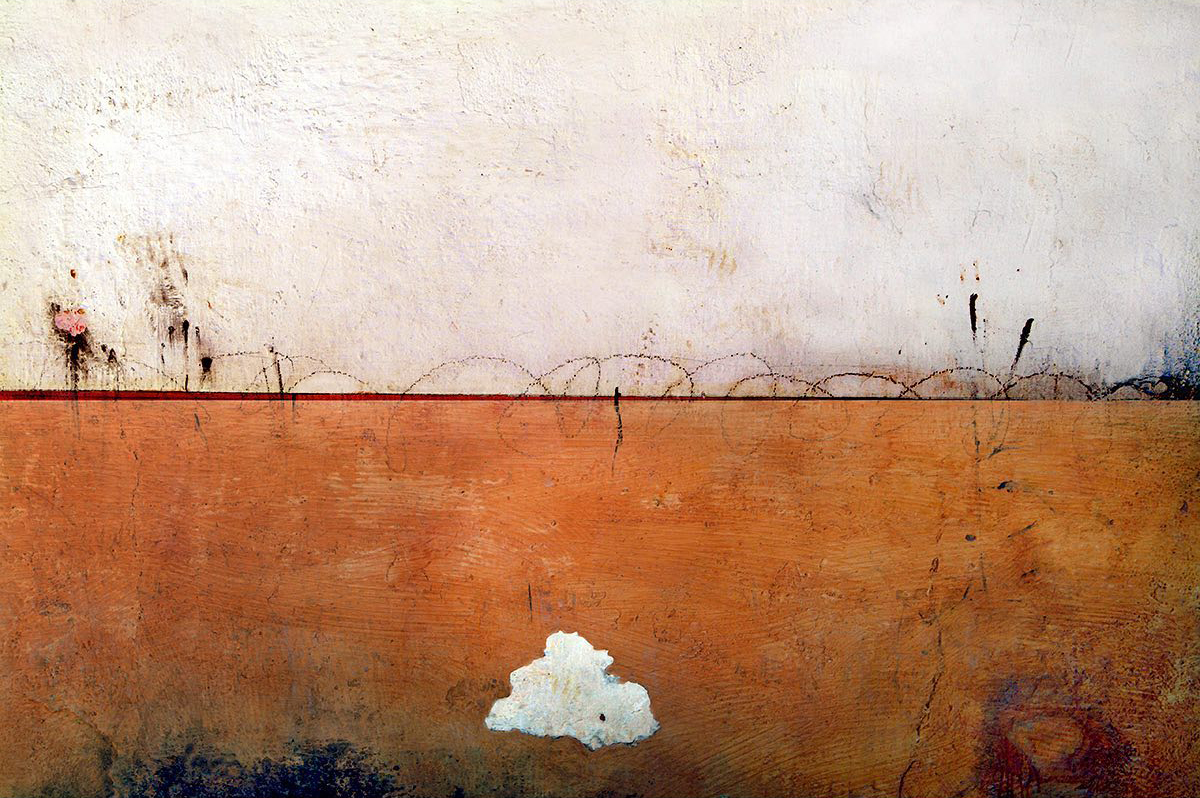
“White Over Orange” (El Tuito, Mexico, 2003) by J. Alan Constant
 J. Alan Constant is an abstract artist whose images blur the boundary between photography and painting. He thinks of his camera as a tool to gather raw material, which he transforms through creative editing, finding beauty in the ordinary and the mundane. Although his work is an expression of innermost feelings and experiences, his images result from an intuitive awareness of the world around him. Alan is also an important figure in the artistic community on Instagram, having done much to promote his fellow artists and bring them together.
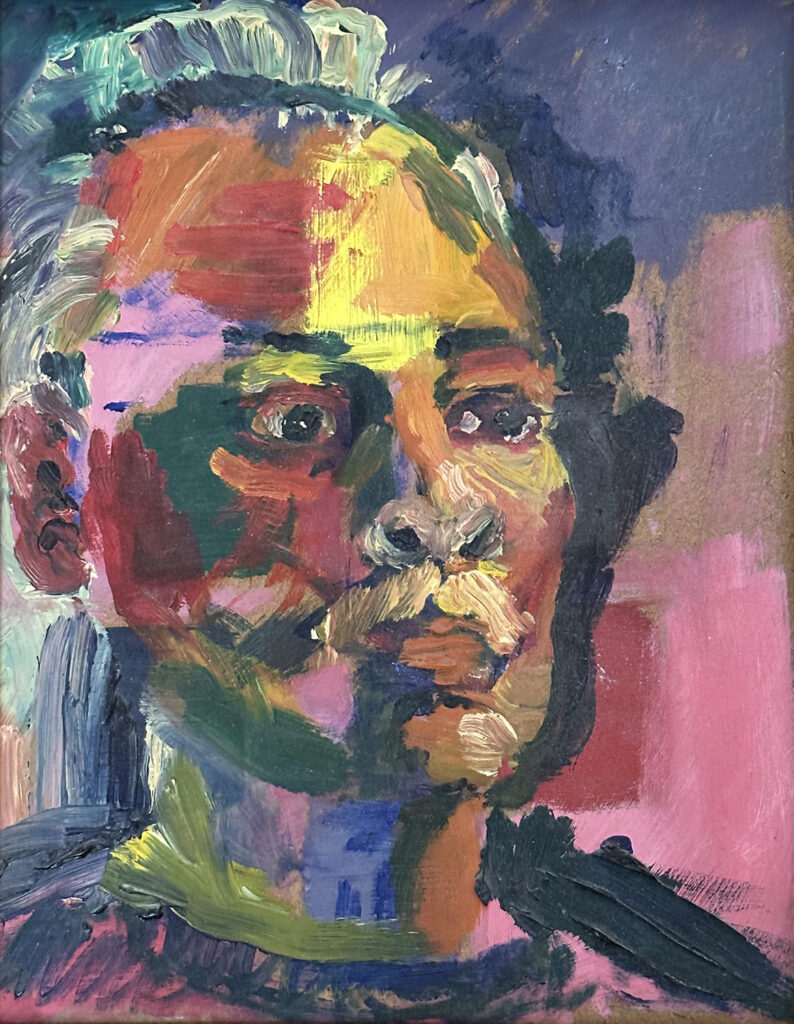 J. Alan Constant is an abstract artist whose images blur the boundary between photography and painting. He thinks of his camera as a tool to gather raw material, which he transforms through creative editing, finding beauty in the ordinary and the mundane. Although his work is an expression of innermost feelings and experiences, his images result from an intuitive awareness of the world around him. Alan is also an important figure in the artistic community on Instagram, having done much to promote his fellow artists and bring them together.
Here is Paul Rowland’s interview with him.
Please tell us about yourself and your background.
I have been photographing for the past 45 years. I began in 1977 with the idea of creating inspirational books with photographs à la Ansel Adams. I studied photography and Art History at San Francisco State University and got a degree in Art History in 1982. I was enthralled with abstract art and actually tried my hand at painting, but I eventually realized that I was more skilled at photography. When I started photographing, I practiced the West Coast brand of photography as typified by the Group f/64 (Ansel Adams, Edward Weston, Brett Weston, et al.). I was out shooting landscapes in about 1980, and I suddenly had the idea to shoot a rusted green water tank against a blue sky, but I shot it in an abstract manner letting the green tank and blue sky fill the image (think Mark Rothko). That was probably the first time I consciously shot an abstract image. I didn’t do anything with the photograph, but it planted a seed.
Over the years, I tried my hand at more abstract imagery as it occurred to me. The one image that really got me interested in abstract imagery (and using Photoshop to enhance my vision) is “White Over Orange” [see above]. The image was half white and half orange - a very similar composition to the green tank and blue sky that I had shot about 20 years earlier. When I returned home and looked at the file on my computer, it really looked like nothing much. But something urged me to play with it in Photoshop. I was able to pull out colors and details that I didn’t know were there. I also made some “mistakes” in processing it, which I decided to leave in. The result was fascinating to me. This image became something of a seminal image in my evolution as an abstract artist. It taught me to not overlook any subtle surfaces when I am shooting images and it also taught me that my post-processing decisions are as important in my work as my decisions about what images to capture.
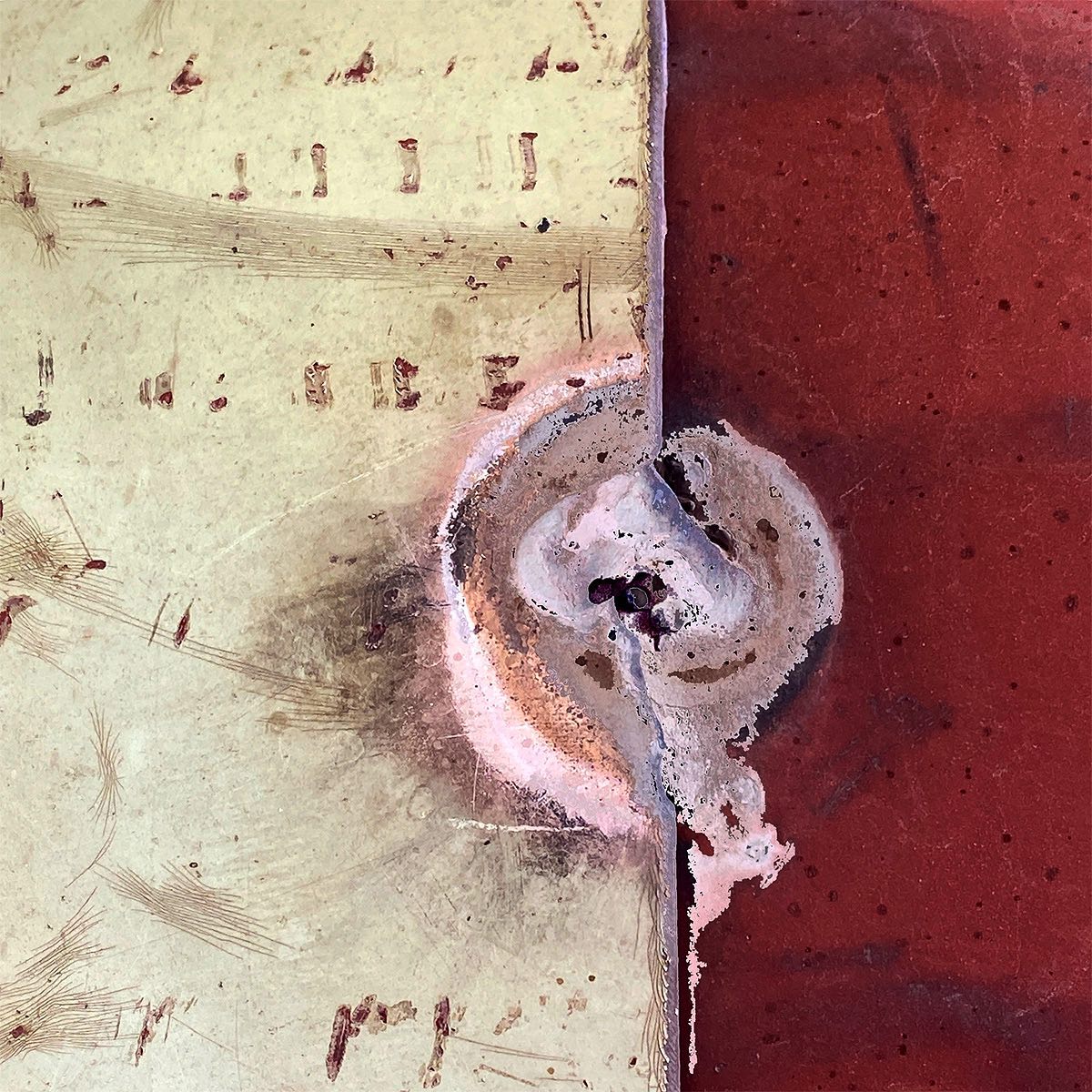
“Sonatina” (Madrid, New Mexico, 2022) by J. Alan Constant
Why are you drawn to the subjects you photograph?
This question requires a cerebral response, but my approach to finding subjects is not cerebral. My experience with photography is much more intuitive. Over the past 15 years that I have focused more on abstract imagery, I have learned what subjects could be lodestones for my creativity. Certainly old dumpsters and deteriorating billboards provide fodder for my imagery, but also anything metallic or rusty, monotone surfaces - which sometimes can be transformed into something beautiful in Photoshop - and any kind of design that would make an interesting composition. Sometimes, it is in an area that is 2 square inches and other times, it could be a wall that is 20 square feet. It just means that I have to keep my eyes open, moving in and out of whatever scene that is in front of me. I have to be aware of what it is in a scene that attracts me and crop out anything in the image that detracts from what I see.
In the case of “Sonatina” [see above], the actual image area was maybe 3 or 4 square inches. I found this on a metal sculpture in Madrid, New Mexico that yielded a number of good images for me. Most of the images I got from here were pretty small in actual size. It required me to keep looking closely at it to find interesting compositions. While I am shooting like this, I am not thinking very much about what I am going to do with the image because I can’t really see everything that is in the image. I am also moving pretty quickly, and I don’t have the time to try to examine each area closely. That comes later in Photoshop. In “Sonatina”, when I pulled it up for post-processing, I started seeing things that I did not see when I was shooting. The central figure reminded me of a rose and there were marks on the left side that reminded me of musical notations (hence the title). The influence of Rothko is also seen here. All this goes to say that I try to keep my eyes and mind open to what presents itself in my field of vision. It takes discipline and practice, which I have been able to develop over the years.
How does your location and environment affect your work?
I have heard it said that it is almost impossible (in very technical scientific terms) to accurately determine the temperature of a liquid because once a thermometer is placed in the liquid, the temperature of the thermometer changes the temperature of the liquid. This is what comes to mind when I consider how my location and environment affect my work. I used to travel to other countries to find new images to photograph, but I would often find that being in a new environment affected how I saw things. Sometimes I would start shooting different kinds of subjects. For instance, I went to Ireland a few years ago thinking I was going to find new abstract subject matter, but I was so struck by the beauty of the country that I ended up shooting a lot of nature shots and very little abstract imagery. But increasingly over the years, I have learned how to just keep my eyes open wherever I am and find interesting images regardless of my locale or environment.
On a more practical level, though, my current locale has created some specific challenges to the kind of images I like to shoot. I moved to New Mexico from San Francisco in July of 2021. The light in New Mexico is sunnier and brighter than the foggy, diffuse light of San Francisco. I actually prefer diffuse light when I am shooting. When I have strong shadows in my photographs they are difficult to control. Harsh shadows create more depth in a photograph, but I like to work with a flatter kind of image. I prefer to create depth through controlling contrast and juxtaposition of color. Strong shadows can work well in traditional photographs, but in creating abstract imagery, I like to be able to have fluid control when I am in the post-processing phase. Consequently, when I am out shooting, I carry a small umbrella to eliminate the shadows in my subjects. It works pretty well when I am shooting small areas, but sometimes I just have to bite the bullet and deal with shadows the best I can.
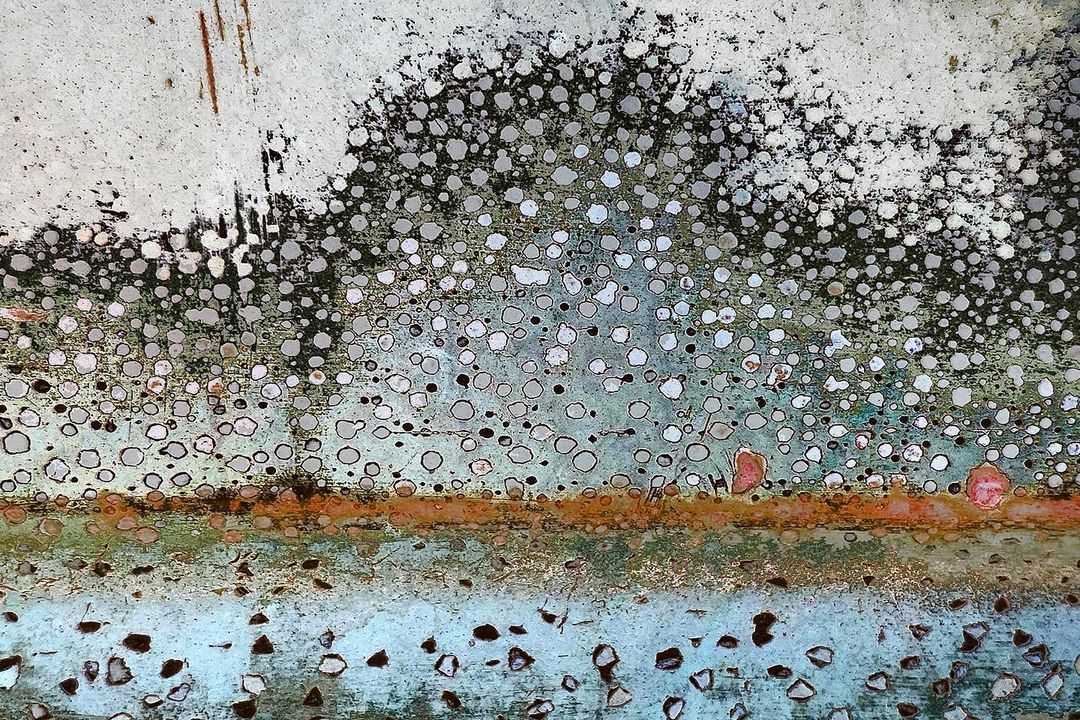
“Hailstorm” (Albuquerque, New Mexico, 2021) by J. Alan Constant
What does abstract photography mean for you?
First of all, I don’t separate abstract photography from any other medium working in abstract art. A camera is a tool, just like a paintbrush or a palette knife is a tool. Most painters, collagists and photographers work within a two-dimensional space and the inherent dynamic tension that exists in the confines of that space. The question is always: how are you going to work within that space to create a tension that holds a viewer’s interest? I have always liked representational photographs, but over the past 15 years or so, I find myself creating more abstract imagery because I (and the viewer) are freed from the constraints of traditional photography. Most traditional photographic imagery creates inherent limits in the viewer’s mind - that is, an image of a house is not an image of a horse or vice versa. But in abstract work, the limits are lifted and the mind is free to roam around and imagine freely. There are not the same visual constraints to channel your mind into a particular finite experience. There is a freedom for the artist in creating the piece that, hopefully, is rendered into a similar freedom for the viewer. William C. Seitz, an American artist and art historian, said it this way:
Abstract Expressionists value expression over perfection, vitality over finish, fluctuation over repose, the unknown over the known, the veiled over the clear […] and the inner over the outer.
— William C. Seitz
Placing the value on expression and vitality over perfection and finish is what creates this freedom for the artist. At this point the artist is conforming to nothing but his or her own inner urgings and the expression of innermost feelings and experiences. This may sound like a lot of gibberish, and it will be nothing more than that to anyone who has not actually had to wrestle with creativity.
Abstract imagery is a lot like reading a map. And just like reading a map, it can spark my imagination and take me to places that I’ve never been. The reality of a place often clashes with my fantasy of it, but, as long as I can adjust, the reality can be enjoyable in a different way. An abstract image actually is a map to the unconscious mind of the artist. In the same way that jazz or classical music can create a particular experience or emotion in the listener (and this music is an inherently abstract experience), abstract visual imagery can create an emotion or experience in the viewer. It can be a beautiful experience or an uncomfortable experience, but if you are willing to go along for the ride, it can take you to new places and even new ways of thinking. Understanding an image is not always necessarily the point. And, to paraphrase Picasso, trying to understand art is not unlike trying to understand the song of a bird - it just is.
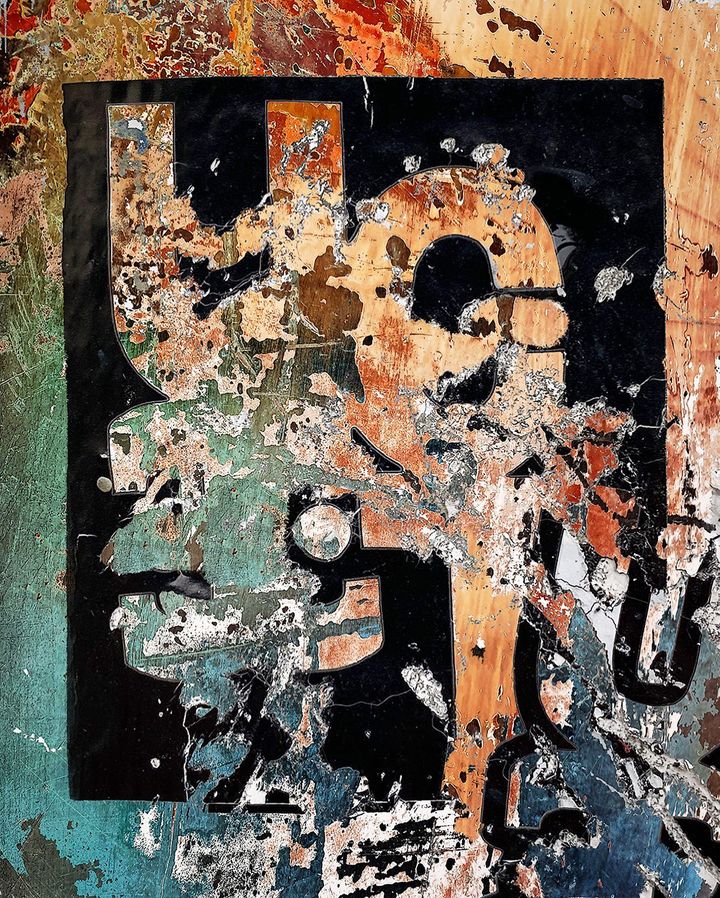
“Homage to Francoise” (San Francisco & Albuquerque, 2021) by J. Alan Constant







What do you think?
It is nice to know your opinion. Leave a comment.