


How would you describe the creative act for yourself?
Creating photographs is a very intuitive experience for me. I cannot always express into words what it is that attracts me to a certain image. I don’t do a whole lot of thinking when I am shooting. When I capture an image with my camera, I never know what it can or will become. I often shoot an image without knowing what it will become to me over time or what it will evolve into once I’ve had a chance to live with it for a while. I often take pictures of objects that look very plain and ordinary thinking that I might be able to pull something out of them in post-processing. And sometimes I am able to do just that. Some of my favorite images are the ones that have surprised me with a beauty and power that was not apparent when I captured the image. I have learned to never dismiss an image until I have had a chance to see what it could become in Photoshop. The work I do in Photoshop is just as important creatively as finding the image in the first place. When I am shooting I am really collecting raw materials to be refined in the post-processing phase. When I enter this phase, I like to think of it as “letting the image tell me where it wants to go”. It is a trial and error process, but if I remain open to it, my “intuitive mind” leads me to a satisfying result.
I have an artist friend, Françoise (@franswazzart), who I met through Instagram. She is a wonderful mixed media artist who has been very generous to me and my family, and I wanted to create an image in homage to her. The piece I created is a composite photograph. I don’t always do composites, but sometimes I have two images that do not seem to make it on their own. That was the case for this piece. Sometimes I have to try several combinations before I hit on the right one, and this is where “letting the image tell me where it wants to go” comes into play. It took quite a bit of trial and error before I came upon this combination. The color palette in this image is the type of color palette that she would use in her work, so the image said “YES” when I finally got it to this point. Not every image takes as much work as this one took. In the same way I need to keep my eyes open when I am shooting, I need to keep an open mind when I am in the post-processing phase and let the image take me wherever it wants to go. Sometimes it can take minutes to see where it wants to go, but sometimes it could take months. I just have to let the process take its own course.
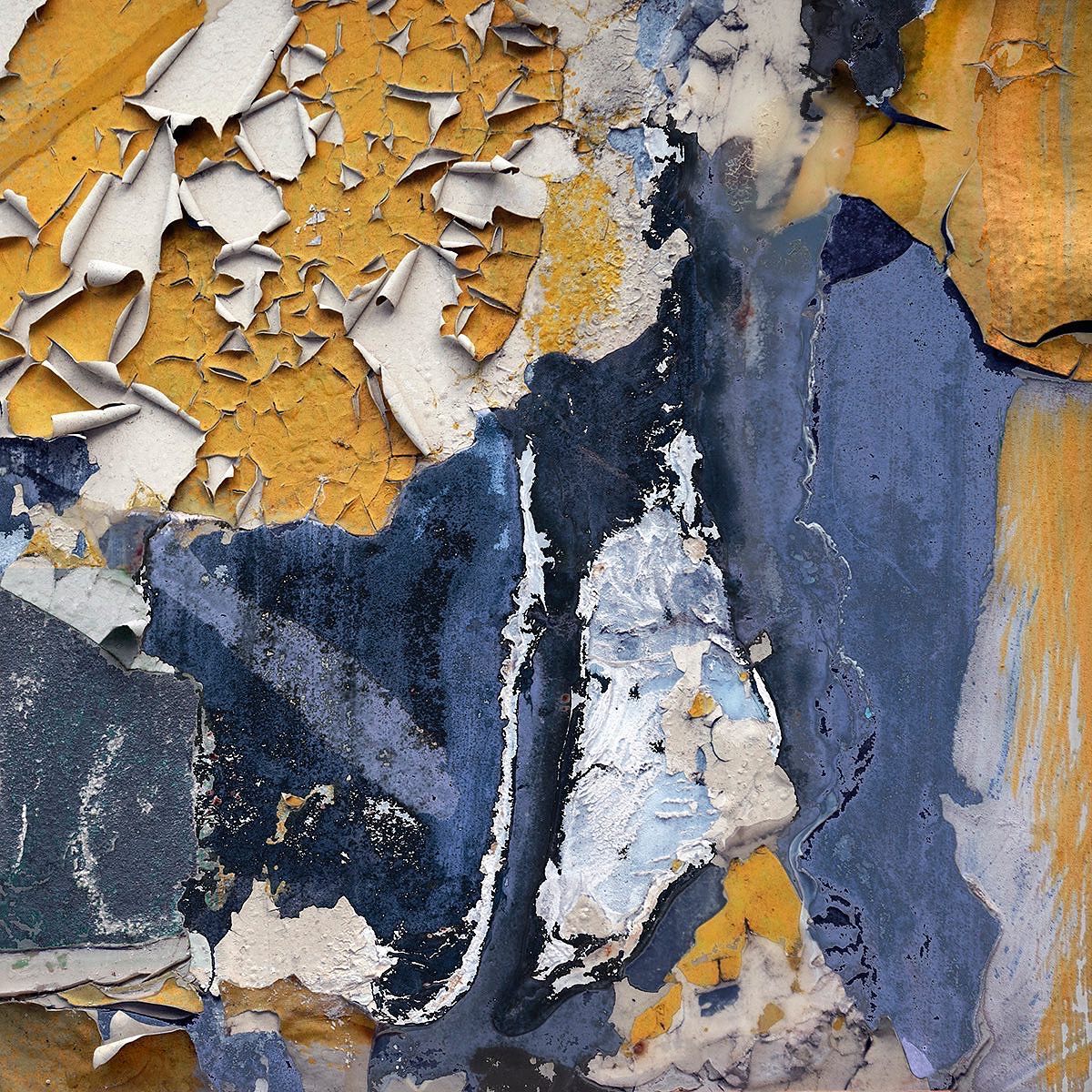
“Debussy Plays” (San Francisco, California, 2020) by J. Alan Constant
The way you describe your practice often includes a spiritual, mindful or contemplative element. What role does spirituality play in your photography?
For me, creativity can be like meditation or a spiritual practice. In meditation, one of the goals is to let go of the thinking mind and to get in touch with something deeper and ineffable. When I am creating imagery, I am relying much more on my intuition than on my thinking mind. I am able to transcend my intellect, and it brings me in touch with a deeper and richer experience which results in the imagery that I create. When I am shooting or involved in the post-processing of my photographs, I am very much in the present moment. I am usually not aware of the time during these moments. The act of creation is a god-like experience. To create I have to be in touch with an unnameable source inside of me. Some people call that God. I like to think of it the way Paul Tillich describes it: my “ground of being”. That creative frame of mind is a very spiritual place for me. It is a kind of meditation that requires open eyes, open mind and open heart. And that brings to mind the words of a hymn I learned growing up in a fundamental Christian home: “Open my eyes that I may see”, which is very apropos of the photographic experience - I must consciously keep my eyes and mind open so that I can see what is right in front of me.
Spirituality is a deeply personal experience, but it is also about connection to something greater than one’s self. Sometimes it is community that is greater than one’s self. My art community on Instagram has been a great source of support and inspiration for me. I have also had my eyes opened by colleagues who see my work in ways that I can’t see it. “Debussy Plays” [see above] is a good example of how an artistic friend opened my eyes. To me, this was just a wall of peeling paint that made an interesting design. But Shar Marie (@sharmarie_studios) saw Debussy in the image and opened my eyes. In my abstract work, I don’t always have the need to relate it to a subject in the real world, but in this case I was delighted.
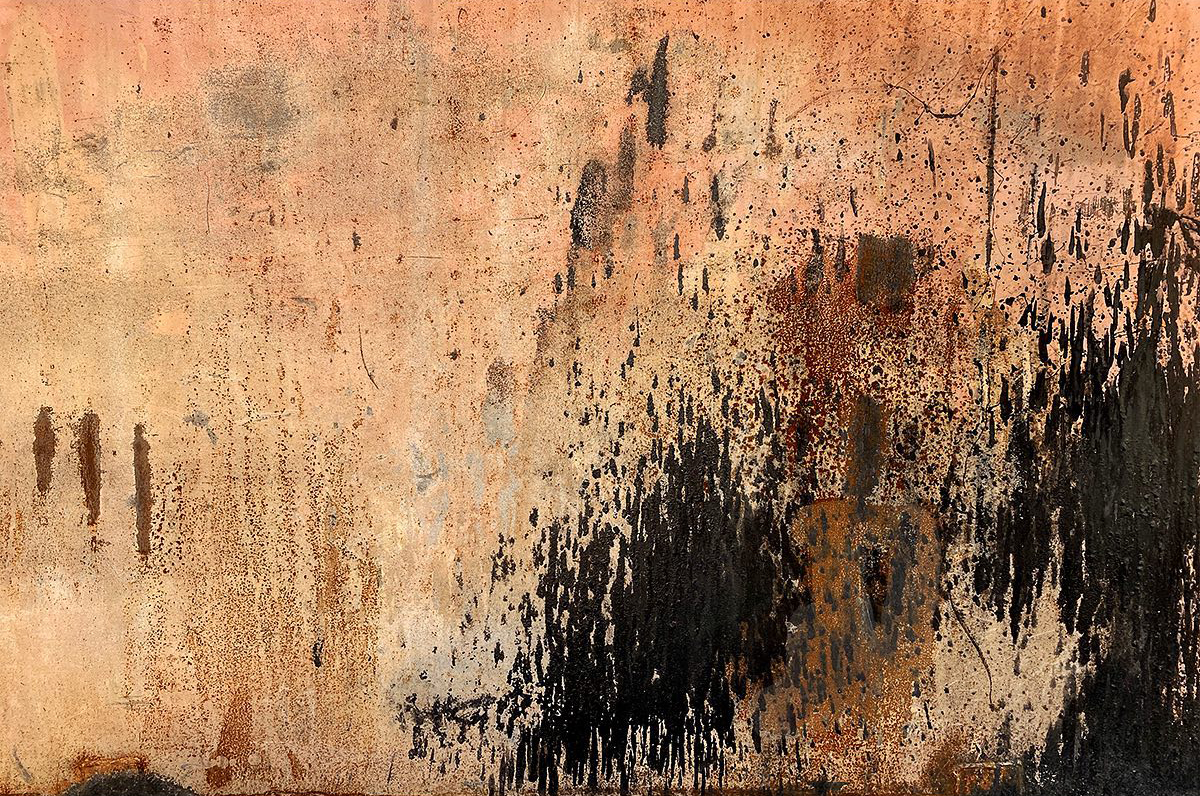
“Splatterly #3” (Albuquerque, New Mexico, 2022) by J. Alan Constant
Many of your images could be described as “painterly” and contain echoes of abstract art. What role does painting and art history have in your work?
I am subconsciously thinking of all the great abstract paintings I have seen over the years. I believe that this subconscious thinking has a great effect on my intuition and creates my attraction for certain imagery. I certainly love good photography, but I probably spend more time looking at paintings and collage than I do looking at photographs. A few years ago I attended a workshop that dealt with professional practices for artists. One assignment was for each of us to create a PowerPoint presentation about “My Place In Art History”. We each had to look at past artists who influenced us and contemporary artists who we identified with and place ourselves within that framework of art history. Since I received my degree in Art History, this assignment was right up my alley, and it helped me to validate myself as a contemporary artist. During that assignment I discovered the art of Antoni Tàpies, a Spanish artist, whose work echoed some of the visual themes that appear in my own work. I love the work of other abstract painters (Joan Miró, Mark Rothko, Jackson Pollock, Richard Diebenkorn and Cy Twombly among many others), and I think they have all affected my photography in subtle ways.
At times I will come upon a certain image in the real world which speaks to me. Sometimes the images I find obviously look like paintings and other times it is a more subtle relationship to painting. In the case of “Splatterly #3” [see above], it was more obvious. It looks to me a bit like Jackson Pollock or Cy Twombly. This was not consciously thought out while I was taking the picture, though. It was more of an artistic decision that was made on the subconscious level. I think that I subconsciously look for imagery that could be paintings - it is more of an intuitive process than it is conscious thinking.







What do you think?
It is nice to know your opinion. Leave a comment.